Have you ever felt curious about something? Or has an emotion, like frustration, ever fueled your curiosity?
It is likely that you have, but have you ever been curious in a way that your life or the life of someone else depended on it? You don’t have to know the answer right away. I invite you to sit with it.
For me, curiosity was born from one of the hardest seasons of my life. To become a U.S. permanent resident, I had to leave everything behind and return to Mexico. I was enojada, angry that a process meant to give me a future required me to put my life on hold. I also felt deep despair. There were days when the uncertainty turned into depression, and I struggled to see beyond what I had lost.
The only thing that brought me peace was walking. One step at a time, I began to notice the trees, the birds, the changing sky, and the quiet rhythm of nature. Those walks sparked a new curiosidad: Why did I always feel lighter after spending time outdoors? That simple question led me to discover the powerful connection between nature and mental health, and it reminded me that healing often begins with paying attention.
That journey inspired the title of this blog, Mi Granito de Arena literally, “My Little Grain of Sand.” In Spanish, it refers to making a small contribution to something bigger than yourself. This blog is my granito de arena: a space where I hope to share what I’ve learned, honor my journey, and help others feel a little more seen, heard, and hopeful.
Curiosity of the “Other”: A Necessary Ingredient to Advocacy
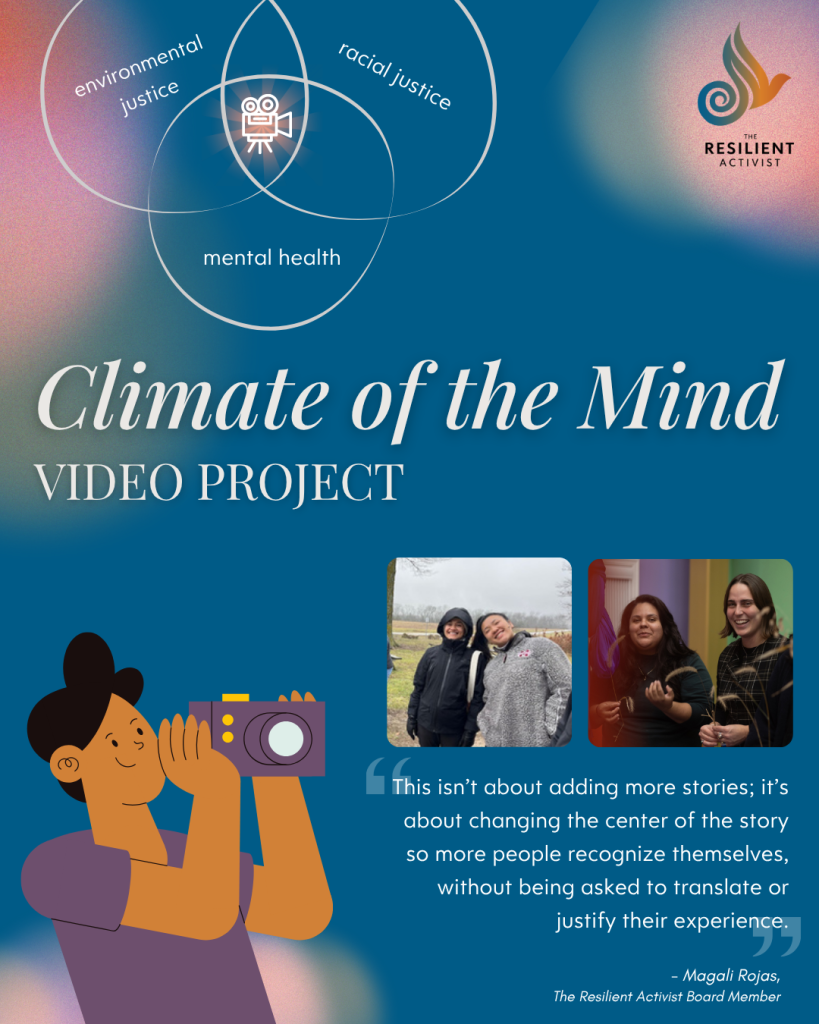
Nonprofit The Resilient Activist intentionally supports people carrying the weight of climate change, eco-grief, anxiety, and burnout. The organization also seeks to amplify voices that are often missing from dominant narratives.
Climate of the Mind is a video project hosted by The Resilient Activist that collects stories from nonprofits and individuals whose work at the intersection of racial justice, environmental justice, and mental health often goes unheard. I’ve been inspired by two creative, badass women, Victoria Feazelle and Phoebe Pinkner, to co-create this project, and I hope they too will share their stories because as we know, women are often underrepresented.
The goal of this video project is to share the stories of individuals and organizations that are often underrepresented, sidelined, and may have limited capacity to highlight the impactful work being done in their local communities. This is achieved by collecting video stories in which people dive into matters concerning racial justice, environmental justice, and mental health. Climate of the Mind is all about representation through untold narratives.
In my video shared through Climate of the Mind, I explored themes that carry more depth than I could fully express in a single, succinct video. Two questions, in particular, stayed with me: Why does representation matter? and How do you show up in spaces where you don’t feel heard or seen?
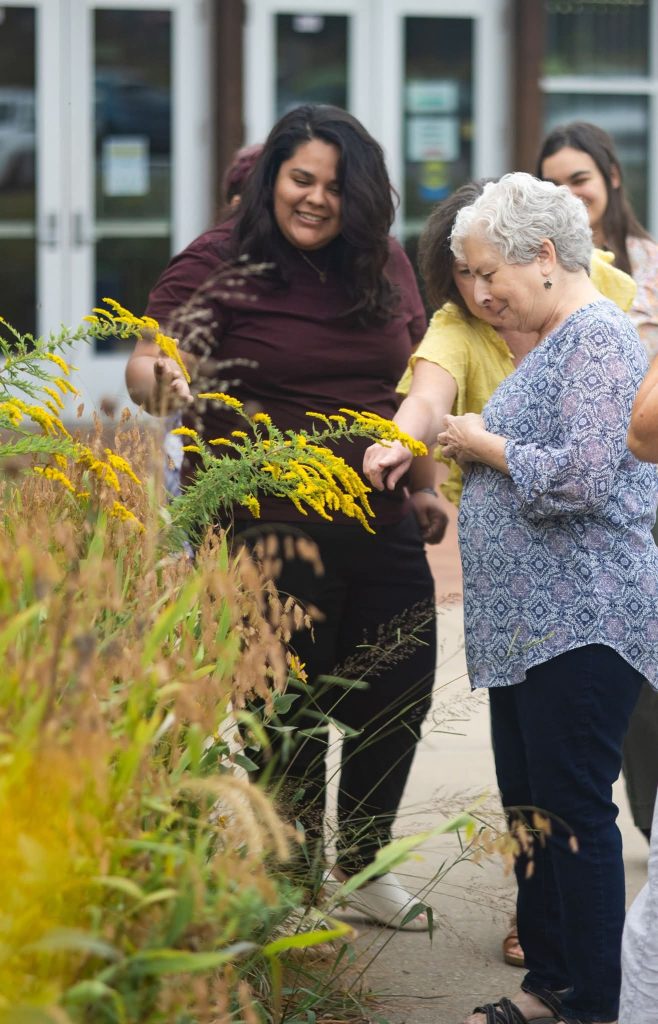
Why does representation matter?
As a Latina immigrant, environmental educator, and mental health advocate, my answer to the first question is deeply personal. Representation matters because stories have the power to help us feel less alone. Seeing someone who shares your lived experience can remind you that your voice belongs, too.
How do you show up in spaces where you don’t feel heard or seen?
My answer to the second question is rooted in curiosity. I show up by sharing my own story, making space for others to share theirs, and listening without judgment. Sometimes, the most meaningful thing we can offer isn’t advice, but creating a safe space for vulnerability.
That brings me back to the question I asked at the beginning of this blog: Have you ever been curious in a way that your life or the life of someone else depended on it? Sometimes curiosity isn’t simply about finding answers. Sometimes it’s about creating the conditions for someone else to tell their story, perhaps for the very first time.
¿Cómo que tienes depresión?: Cultural Origins, Taboos, and Mental Health
Growing up as a Latina meant that mental health didn’t exist in many conversations around me. “¿Cómo que tienes depresión? Será flojera. ¡Ponte a lavar los trastes! Más bien estás loca.” I heard things like, “How could you possibly have depression? You’re just lazy. Go wash the dishes. You’re crazy.”
I share this not to ridicule my culture or community, but in hopes that you can understand me better, or perhaps make a connection if you’ve experienced something similar within your own family. Mental health is one of the many issues I care deeply about. It turns out that most of the causes I advocate for have impacted either me or someone I love.
Modern society normalizes life lived in separate silos, disconnected from neighbors, families, fellow humans, and animals. In this state, we may come to think, Why should something that doesn’t affect me deserve my attention?
ERRR. Wrong. So Wrong.
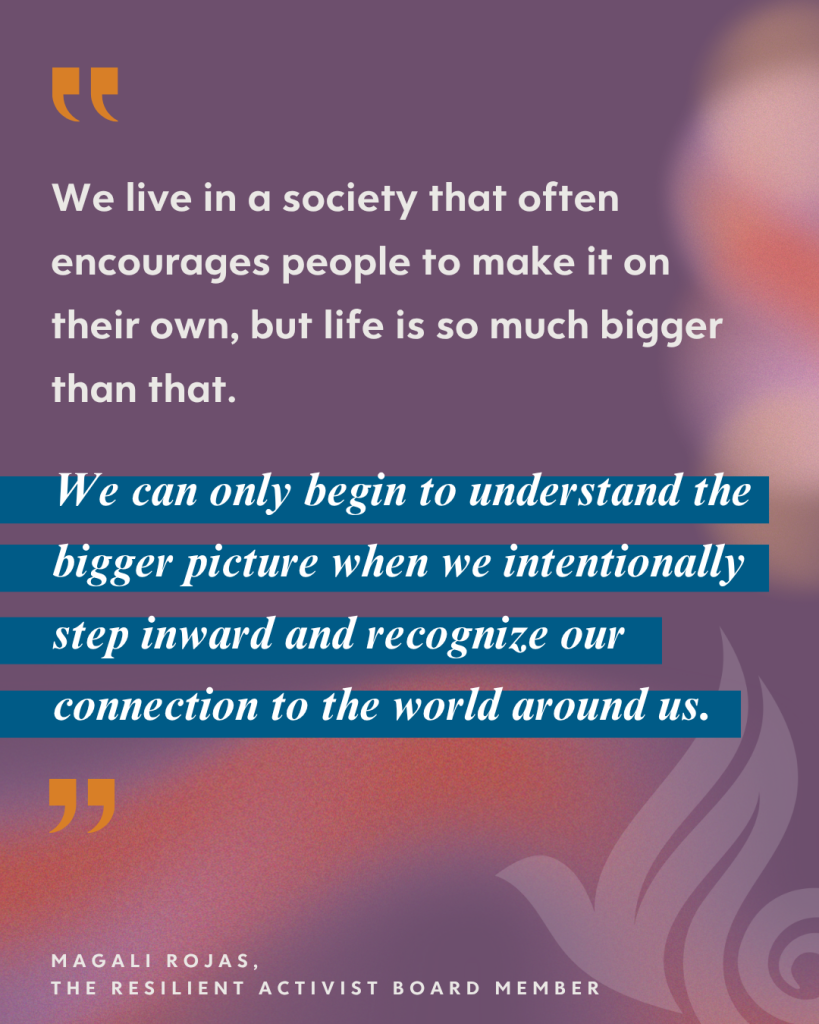
Our current culture can encourage people to make it on their own, but life is so much bigger than that. We can only begin to understand the bigger picture when we intentionally look inward and recognize our connection to the world around us.
The Importance of Compassion, Mindfulness, and Curiosity in Activism
When difficult emotions underlie our curiosity, such as betrayal and despair, we often act before seeking to understand what we are feeling. Imagine parents who feel betrayed because they have a queer daughter who, in their minds, was supposed to give them the joy of having a traditional heterosexual relationship. What if that daughter felt despair after being kicked out of her home?
Making people feel ashamed or like outcasts does nothing to strengthen our relationships. It damages them. It can also cause people to hurt themselves or others. Imagine how different stories like this could be if they were approached with nonjudgmental curiosity, safety, and deep listening.
The Resilient Activist is a nonprofit that fosters community resilience to the climate crisis, in part by promoting mindfulness as a tool for effective activism and healthy living. If you’ve had the experience of fostering inner resilience, chances are you’ve had to overcome something difficult to grow that inner fortitude.
It’s not always easy to share what resilience means to us because of the feelings and untold stories that are tied to it. Stories aren’t meant to be forced. They are meant to be free, in the same way that a bird or a snail is free, moving at their own pace.
If we’re to share our story with others or engage in resilient activism, we must be grounded to do so effectively. In the mental health context, being grounded means to be present, emotionally balanced, and self-aware. It is both a practice and conscious state of being.
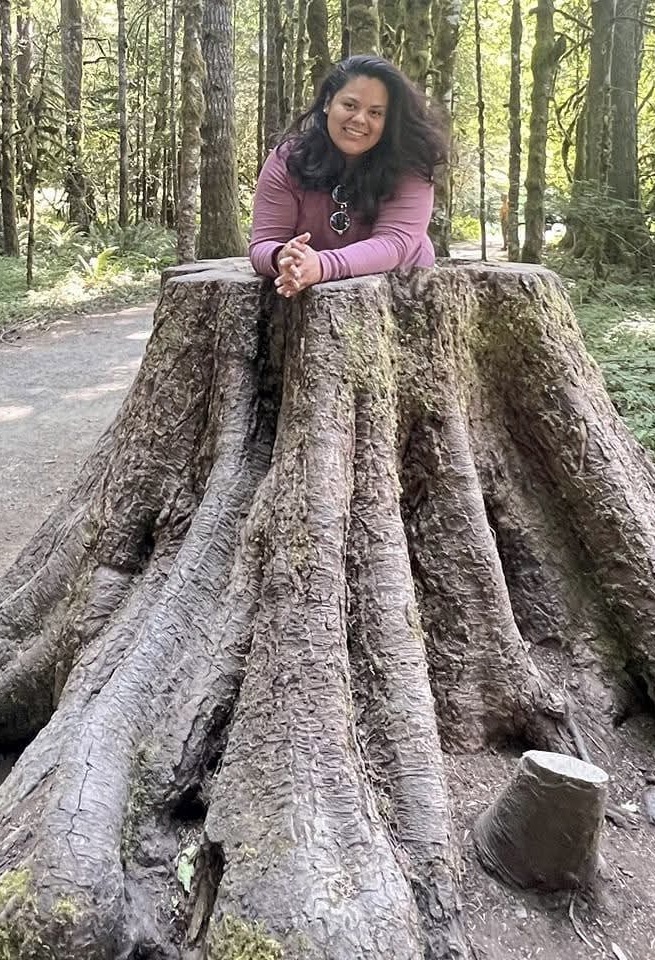
I stay grounded by going on hikes and connecting with tree moss and pollinator plants. I also do so by building community.
When I asked whether you’ve ever been curious as if your life depended on it, I wasn’t asking a hypothetical question. I was asking the question that changed my own life. Curiosity carried me through uncertainty, helped me find healing in nature, and reminded me that even in moments of deep dolor, there is still room to imagine something different.
I believe this kind of curiosity is at the heart of justice work. It asks us to imagine a world that doesn’t yet exist and to keep searching for new ways to care for one another, our communities, and the planet. It is the same curiosity that inspired our Climate of the Mind project: listening to the stories that often go unheard and asking what is possible when we center healing alongside justice work.
The Resilient Activist is part of the vast mycelial network I’ve connected with as an activist, deeply rooted and grounded in the soil. Like mycelium, our strength comes from connection, from sharing knowledge, and from supporting one another beneath the surface.
I invite you to join our network as we work to protect our planet, starting with the infinite galaxy that exists within each of our minds.
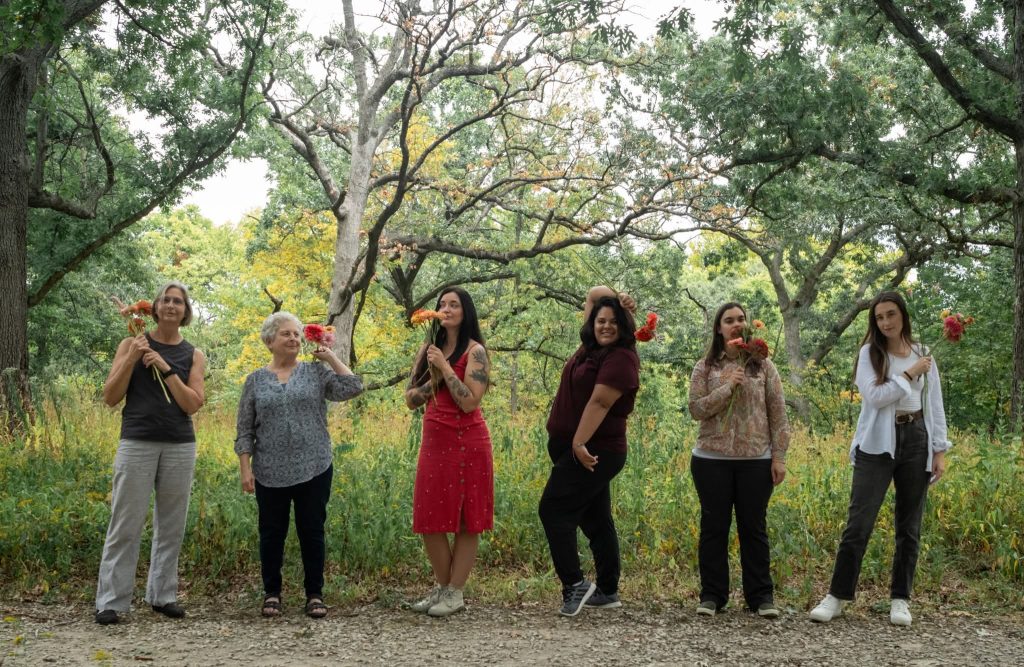
Because sometimes, the smallest act of curiosity, your own granito de arena, your little grain of sand, is enough to begin transforming the world.